
Why Choose the Best Website Design Agency in Saudi Arabia 2026?
How Do You Find the Best Website Design Agency in Saudi Arabia in 2026?
Finding the right website design agency in Saudi Arabia requires more than comparing attractive portfolios or choosing the lowest quote. Businesses need a strategic partner that understands their customers, commercial objectives, local culture, and the technical requirements of modern websites.
A professional agency should be able to create a fast, responsive, secure, and user-friendly website that reflects the brand and supports measurable business goals. It should also understand Arabic and English user experiences, search engine optimization, e-commerce requirements, and the expectations of customers across Saudi Arabia and the wider GCC.
The best choice will ultimately depend on the business's industry, budget, required features, and growth plans. Evaluating an agency's experience, design process, development capabilities, support services, and understanding of the Saudi market can help decision-makers select a reliable long-term partner.
What Is a Website Design Agency and Why Does It Matter in Saudi Arabia?
A website design agency is a specialized company that plans, designs, develops, and maintains websites for businesses and organizations. Its work brings together visual design, user experience, content structure, programming, performance, and digital strategy.
In Saudi Arabia, a professional website has become an important part of how customers discover and evaluate a business. Whether a company serves individual consumers, corporate clients, government entities, or international markets, its website often influences the first impression people form about the brand.
Working with an experienced Saudi web design agency can help businesses create platforms that suit local expectations while meeting international technical standards. This includes producing mobile-friendly layouts, supporting Arabic and English content, improving navigation, and preparing the website for SEO, advertising, and future expansion.
What Does a Website Design Agency Actually Do?
A website design agency turns business requirements into a functional digital platform. The process usually begins with research into the company, its audience, competitors, services, and objectives. The agency then plans the website structure, user journeys, page hierarchy, visual direction, and required features.
Designers create the appearance and interface, while developers build the technical system that makes the website work. Depending on the project, the team may also handle content organization, responsive website design, search engine foundations, analytics integration, security, testing, and launch preparation.
Some agencies provide ongoing professional website services in KSA, including maintenance, performance improvements, content updates, and conversion optimization. This makes the agency more than a visual design supplier; it becomes a technical and strategic partner supporting the website throughout its lifecycle.
Why Is Website Design Important for Businesses in Saudi Arabia?
Website design affects how easily customers can understand a business, explore its services, and complete an action. An unclear or outdated website can make even an established company appear less reliable. A polished experience, on the other hand, helps visitors find useful information and move confidently toward contacting the business, requesting a quote, booking a service, or making a purchase.
For Saudi companies, effective design must also reflect local browsing habits and language needs. A business website in Saudi Arabia may need Arabic and English interfaces, right-to-left layouts, mobile optimization, and culturally appropriate content presentation.
Professional design also supports wider marketing activities. Campaign landing pages, SEO content, social media traffic, and paid advertisements perform more effectively when visitors arrive on a fast, relevant, and easy-to-use website.
How Does a Professional Website Affect Customer Trust in KSA?
Customers often judge a company's credibility through its website before making direct contact. Consistent branding, clear service information, visible contact details, secure browsing, and smooth navigation can reduce uncertainty. A professional website also shows that the business pays attention to quality and is prepared to serve customers through reliable digital channels.
What Role Does Website Design Play in Vision 2030 Digital Transformation?
Saudi Vision 2030 has encouraged organizations across the Kingdom to strengthen their digital capabilities and improve access to online services. Website design contributes by making information, services, and commercial experiences easier to access. Businesses need flexible digital platforms that can support changing customer expectations and continued digital growth.
What Is the Difference Between Web Design and Web Development?
Web design focuses mainly on how a website looks and how people interact with it. It covers areas such as page layouts, colors, typography, navigation, accessibility, responsive behavior, and UI/UX design. Designers aim to make the website visually consistent, intuitive, and aligned with the brand's identity.
Web development focuses on turning those designs into a working website. Front-end developers build what visitors see and interact with, while back-end developers manage databases, servers, integrations, accounts, and other behind-the-scenes functionality.
Although the disciplines are different, successful projects require them to work together. A beautiful design is ineffective if pages load slowly or features fail. Similarly, technically advanced web solutions in KSA may struggle to engage users if the interface is confusing. A full-service agency coordinates both areas to create a unified result.
Why Do Saudi Businesses Need Professional Web Design in 2026?
Saudi businesses operate in an increasingly connected environment where customers expect quick, convenient, and trustworthy digital experiences. A basic website that only displays company information may no longer be enough. Visitors want to browse comfortably on mobile devices, switch between languages, compare services, communicate easily, and complete transactions without unnecessary steps.
Professional web design helps companies respond to these expectations while building a platform that can grow with the business. It connects branding, technology, customer experience, search visibility, and conversion strategy within one system.
A qualified creative design agency in Saudi Arabia can also help a company avoid expensive structural problems. Planning performance, content, mobile usability, and scalability from the beginning is usually more efficient than repairing a poorly built website after launch.
How Has Digital Transformation Changed Business Needs in Saudi Arabia?
Digital transformation has shifted websites from being optional corporate brochures to becoming active business tools. Companies increasingly use their websites to attract leads, answer customer questions, provide services, process requests, support recruitment, publish content, and sell products.
This change means businesses need websites that connect with their wider operations. Features may include customer relationship management integrations, payment systems, booking tools, analytics platforms, live chat, multilingual content, or automated forms.
Modern website design in Saudi Arabia must also remain adaptable. Customer expectations, marketing channels, and business services can change quickly, so companies benefit from flexible content management systems and scalable technical foundations. A well-planned website allows internal teams to publish updates, launch campaigns, add pages, and expand functionality without rebuilding the entire platform.
Why Is Mobile-First Design Essential for the Saudi Market?
Mobile-first design means planning the website experience for smaller screens before adapting it to larger devices. This approach is valuable because many customers discover brands, research services, and shop online using smartphones.
A mobile-optimized website should provide readable text, clear menus, accessible buttons, fast-loading pages, and forms that are easy to complete. Important actions—such as calling the business, requesting directions, messaging the team, or purchasing a product—should not require complicated navigation.
Responsive website design in Saudi Arabia also ensures that pages adjust to different screen sizes instead of simply shrinking a desktop layout. This improves usability and can support search visibility, engagement, and conversions. Businesses that ignore mobile users risk losing potential customers before visitors have a chance to understand their offer.
How Does E-Commerce Growth in KSA Affect Website Design Demand?
As more businesses introduce online purchasing options, demand has grown for websites that can support complete shopping journeys. An e-commerce web agency in Saudi Arabia must consider more than product presentation. It needs to create clear categories, useful filters, trustworthy product pages, simple checkout steps, and reliable integrations.
Online stores must also manage practical requirements such as inventory, delivery choices, customer accounts, promotional codes, payment processing, and order notifications. These functions need to work smoothly across mobile and desktop devices.
Effective e-commerce design balances appearance with usability. Large visuals and creative layouts can strengthen a brand, but they should not slow down the store or make products harder to find. The objective is to help customers move from discovery to checkout with as little confusion as possible.
What Is Driving the Rise of Online Shopping in Saudi Arabia?
Online shopping is supported by wider smartphone use, convenient digital payments, improved delivery services, and customers' growing familiarity with online transactions. Businesses also value e-commerce because it allows them to reach audiences beyond a physical location and keep products available around the clock.
How Do Saudi Consumers Prefer to Shop Online in 2026?
Saudi customers generally expect fast, mobile-friendly shopping experiences with transparent prices, clear delivery information, and familiar payment options. They also benefit from accurate Arabic and English content, accessible customer support, straightforward return policies, and a checkout process that avoids unnecessary forms or unexpected charges.
What Services Does a Website Design Agency in Saudi Arabia Offer?
A full-service website design agency in Saudi Arabia may provide everything from early strategy and interface design to development, launch, and ongoing maintenance. The exact services depend on the agency's capabilities and the size of the project.
Some companies need a straightforward corporate website, while others require an online store, custom platform, booking system, or multilingual content hub. An experienced agency should identify which services are necessary instead of adding features that do not support the business's goals.
Common offerings include UI/UX design, website development, e-commerce design, WordPress development, landing pages, integrations, SEO preparation, maintenance, and website redesign. Businesses should confirm what is included in the proposal because agencies may define their packages differently.
What Is UI/UX Design and Why Is It Important?
User interface design, or UI, focuses on the visual and interactive elements of a website. It includes buttons, forms, colors, typography, spacing, menus, and other components visitors use. User experience design, or UX, examines the complete journey and determines whether people can accomplish their goals easily.
A UI/UX agency in Saudi Arabia may research user expectations, organize content, map customer journeys, create wireframes, and test prototypes before the website is developed. This process can reveal confusing navigation or missing information early, when corrections are less expensive.
Strong UI and UX work together. A visually attractive interface draws attention, while a logical experience helps visitors continue. Both are needed to create a website that feels credible, accessible, and comfortable across languages, devices, and customer groups.
What Is Included in Website Development Services?
Website development services transform approved designs into a functional platform. The work may include front-end coding, content management system setup, database development, form creation, multilingual features, API integrations, analytics, security configuration, and responsive behavior.
Developers also prepare templates for different page types, such as services, products, articles, case studies, or team profiles. Depending on the agreement, they may upload initial content and provide training so the client can manage routine updates.
Professional website developers in Saudi Arabia should test the platform across common browsers and devices before launch. They should also consider speed, accessibility, technical SEO, data protection, and future scalability. The final scope must be documented clearly so the client understands which functions, integrations, content tasks, and post-launch services are included.
What Is E-Commerce Website Design?
E-commerce website design is the process of creating an online store where customers can discover, evaluate, and purchase products or services. It combines brand presentation with product management, payment processing, order handling, shipping, and customer communication.
An online store agency in Saudi Arabia may work with an existing platform or develop a more customized solution. The correct approach depends on the number of products, expected order volume, required integrations, internal resources, and future expansion plans.
The store should make purchasing feel simple and secure. Product information must be clear, checkout steps should be limited, and customers should understand payment, delivery, return, and support options before confirming an order.
What Features Should a Saudi E-Commerce Website Include?
A Saudi e-commerce website may need bilingual content, mobile-friendly product pages, search and filtering, inventory management, secure checkout, order tracking, shipping options, promotional tools, and customer support channels. The final feature set should match the products, audience, operational workflow, and regulatory responsibilities of the business.
How Do Payment Gateways Work for Saudi Online Stores?
A payment gateway securely transfers transaction information between the customer, online store, payment processor, and financial institution. Saudi stores should select compatible providers based on supported payment methods, fees, settlement terms, security, and integration requirements. Exact availability and conditions should always be verified directly with each provider.
What Is Landing Page Design and When Is It Needed?
A landing page is a focused page designed around one campaign, audience, or action. Unlike a general website page, it usually limits distractions and guides visitors toward a specific conversion, such as submitting an inquiry, downloading a resource, registering for an event, or purchasing an offer.
Businesses may need landing pages for paid advertising, product launches, seasonal campaigns, new services, or audience-specific promotions. The page should align closely with the message that brought the visitor there.
Effective landing page design uses a clear headline, concise supporting content, relevant visuals, trust elements, and a prominent call to action. Agencies can also connect the page to analytics and lead-management tools so businesses can measure results and improve campaign performance.
What Is Website Maintenance and Support?
Website maintenance keeps a platform secure, functional, and up to date after launch. It may include software updates, security monitoring, backups, performance checks, bug fixes, content assistance, and compatibility testing.
The required level of support depends on the website. A small informational site may need periodic checks, while a busy online store or custom platform may require continuous monitoring and faster technical assistance.
Businesses should ask agencies to define response times, included tasks, support channels, and additional charges before signing an agreement. They should also clarify who manages hosting, domain renewals, backups, and third-party licenses. A structured maintenance plan reduces the likelihood that preventable technical problems will disrupt customers or marketing activities.
What Is Website Redesign and When Should a Business Consider It?
Website redesign involves improving an existing site's appearance, structure, content experience, or technology. It can range from refreshing the visual identity to rebuilding the platform completely.
A business should consider working with a website redesign agency in Saudi Arabia when its website feels outdated, performs poorly on mobile devices, loads slowly, is difficult to update, or no longer reflects its services. Declining conversions, confusing navigation, security concerns, and weak search performance may also indicate that changes are needed.
Before redesigning, the agency should review the current website's strengths and weaknesses. Useful content, valuable URLs, and working features should not be removed without reason. The goal is to improve the experience while protecting existing digital assets and minimizing disruption during the transition.
How Do You Choose the Best Website Design Agency in Saudi Arabia?
Choosing the right agency requires a structured evaluation of its experience, capabilities, processes, and understanding of your market. An impressive portfolio is useful, but it does not automatically prove that the team can manage your specific requirements or deliver a website that supports your objectives.
Start by defining what the website needs to achieve. You may want to generate qualified leads, strengthen corporate credibility, sell products, enter new GCC markets, or improve an outdated digital experience. Clear goals make it easier to compare agencies based on relevant strengths.
A reliable website design agency in Saudi Arabia should communicate clearly, explain its process, define the project scope, and provide realistic expectations. It should also demonstrate expertise in design, development, mobile usability, bilingual experiences, SEO foundations, and post-launch support.
What Should You Look for in an Agency's Portfolio?
An agency's portfolio should demonstrate more than visual creativity. Review whether its websites are easy to navigate, mobile-friendly, consistent with each client's brand, and suited to different industries and audiences. The projects should not all appear to use the same layout with minor cosmetic changes.
Look for work that resembles your requirements in complexity rather than appearance alone. For example, a company planning an online store should examine the agency's e-commerce experience, while a large organization may prioritize corporate websites and multilingual platforms.
If possible, visit the live websites rather than relying only on screenshots. Test navigation, page speed, forms, mobile responsiveness, and language switching. Some websites may have changed since the agency delivered them, so ask the team to explain its exact role in each project.
How Important Are Client Reviews and Testimonials?
Reviews and testimonials can reveal how an agency handles communication, deadlines, revisions, support, and unexpected challenges. They are especially useful when they include specific details about the project and the client's experience rather than general praise.
However, testimonials displayed on an agency's website should not be the only source of evaluation. Businesses can also review independent platforms, public business profiles, and professional networks when available. Consistent feedback across several channels is generally more informative than a single review.
Pay attention to how recent the feedback is and whether the projects are comparable to yours. A positive review for a small landing page does not necessarily prove that the agency can manage a complex bilingual platform. When appropriate, ask whether the agency can provide relevant references, subject to client confidentiality.
What Questions Should You Ask Before Hiring a Web Design Agency?
Before hiring an agency, ask how it approaches research, planning, design, development, testing, and launch. You should also understand who will manage the project, how often updates will be provided, and how feedback and revisions will be handled.
Important questions include:
- What deliverables are included in the proposal?
- How many design revisions are included?
- Who will provide and upload the content?
- Will the website support Arabic and English?
- How will mobile responsiveness and performance be tested?
- Are SEO foundations included?
- Who owns the design, code, domain, and website accounts?
- What maintenance and support are available after launch?
- Which third-party fees are excluded?
- What happens if the scope or timeline changes?
Clear answers help prevent misunderstandings and make proposals easier to compare.
How Do You Verify an Agency's Experience in the Saudi Market?
An agency's local experience can be evaluated through its portfolio, team expertise, client references, and understanding of Saudi customer expectations. Ask the agency to discuss projects completed for businesses operating in the Kingdom and explain how local considerations influenced its decisions.
Relevant experience may include Arabic content presentation, right-to-left design, mobile-first customer journeys, local payment integrations, and culturally appropriate visual communication. The agency should also understand that expectations vary across industries, regions, and audience groups.
Avoid relying only on claims such as being a "leading" agency. Ask for practical evidence showing how the team approaches Saudi projects. Strong answers should include details about research, localization, usability, technology, and collaboration without revealing confidential client information.
Why Does Local Market Knowledge Matter for Web Design in KSA?
Local knowledge helps an agency design for Saudi languages, cultural expectations, customer journeys, and commercial practices. It can influence imagery, tone, page structure, payment options, and contact methods. This understanding reduces the risk of producing a technically functional website that feels disconnected from its intended audience.
How Do You Check an Agency's Previous Work with Saudi Clients?
Ask for relevant case studies or live website examples and confirm what the agency delivered. Review the websites on mobile and desktop, test their language options, and examine their usability. Where confidentiality permits, request client references or evidence connecting the agency to the projects it presents.
What Red Flags Should You Watch Out for When Hiring an Agency?
Be cautious when an agency provides a vague proposal, avoids discussing technical details, or promises unrealistic timelines without understanding the scope. Extremely low pricing can also indicate that essential services, revisions, testing, or post-launch support are excluded.
Other warning signs include unclear ownership terms, no documented process, poor communication, and an inability to show relevant work. An agency should never guarantee a specific SEO position or business result because rankings and conversions depend on many factors beyond website design.
Businesses should also avoid arrangements where the agency controls all essential accounts without providing client access. Domain registration, hosting, analytics, content management, and third-party services should be documented clearly. Transparency at the beginning usually leads to a healthier working relationship throughout the project.
What Types of Websites Can a Saudi Web Design Agency Build?
A capable Saudi web design agency can build different types of websites based on the organization's goals, audience, content, and operational requirements. The right format depends on what visitors need to accomplish rather than which style is currently popular.
A corporate company may need a multilingual website that explains its services and strengthens its reputation. A retailer may require a complete e-commerce platform, while a consultant could benefit from a portfolio website and focused lead-generation pages. Some businesses need custom systems that combine public content with accounts, bookings, dashboards, or integrations.
Defining the website type early helps clarify the required technology, features, budget, timeline, and content workload. It also prevents businesses from paying for unnecessary functionality or selecting a platform that cannot support future growth.
What Is a Corporate Website and Who Needs One?
A corporate website represents an organization online and communicates its identity, services, capabilities, and credibility. It commonly includes pages covering the company, business divisions, leadership, projects, news, careers, contact information, and investor or governance content where relevant.
Corporate websites in Saudi Arabia may be used by large companies, professional service firms, government-related entities, industrial organizations, and growing businesses that need a formal digital presence. They often require Arabic and English versions, structured content management, strong security, and accessible navigation.
Unlike a small brochure website, a corporate platform may serve several audiences at once, including customers, partners, employees, investors, and job applicants. Its structure must help each audience reach relevant information without creating an overcrowded or confusing experience.
What Is an E-Commerce Website and How Does It Work?
An e-commerce website enables a business to display and sell products or services online. Customers can browse categories, search for items, view product information, add selections to a cart, choose delivery options, make payments, and receive order confirmations.
Behind the visible shopping experience, the platform manages products, prices, inventory, customer information, promotions, orders, and integrations. Depending on the business model, it may connect with warehouses, shipping providers, accounting software, customer service tools, or marketplaces.
An e-commerce solution should be planned around actual operations. A visually attractive store will struggle if inventory data is inaccurate, delivery rules are unclear, or order management is inefficient. An experienced e-commerce web agency in Saudi Arabia considers both customer-facing design and the systems employees use to fulfil purchases.
What Is a Portfolio Website and Who Should Use It?
A portfolio website presents a person's or company's previous work in a structured and visually engaging way. It may include project images, videos, descriptions, client sectors, challenges, solutions, and outcomes where verified information is available.
Portfolio websites are useful for designers, photographers, architects, consultants, writers, production companies, construction firms, agencies, and other professionals whose work influences purchasing decisions. They help potential clients evaluate expertise before making contact.
The strongest portfolios provide context instead of displaying images without explanation. Each example should help visitors understand what was delivered and why it was relevant. Clear categorization, fast media loading, and concise case studies make the experience easier to explore, particularly on mobile devices.
What Is a Landing Page and How Is It Different from a Website?
A landing page is a single, conversion-focused page created for one audience, offer, or campaign. A full website, by contrast, usually includes multiple pages covering the organization, services, resources, policies, and contact options.
Landing pages reduce distractions by guiding visitors toward one primary action. This might be submitting a form, requesting a consultation, registering for an event, or purchasing a specific product. They are commonly used with paid search, social media advertising, email campaigns, and product launches.
A landing page can exist within a larger website or operate as a standalone campaign destination. Its effectiveness depends on the relevance of its message, the clarity of its offer, the strength of its call to action, and the quality of traffic reaching it.
What Is a Multilingual Website and Why Is It Important in the GCC?
A multilingual website presents content in two or more languages while adapting the user experience for each audience. In Saudi Arabia and across the GCC, businesses frequently use Arabic and English to serve local customers, expatriate communities, regional partners, and international stakeholders.
Building a multilingual website involves more than translating paragraphs. Navigation, page layouts, forms, search functions, images, metadata, and calls to action must work correctly in every language. Arabic versions also require proper right-to-left design instead of simply aligning text to the right.
A multilingual platform can improve accessibility and help a brand communicate more naturally with diverse audiences. It also supports regional expansion when content is localized for each market rather than duplicated without considering cultural or commercial differences.
How Much Does Website Design Cost in Saudi Arabia in 2026?
There is no universal price for website design in Saudi Arabia because agencies calculate costs according to scope, complexity, resources, and responsibilities. A small informational website requires less work than a multilingual corporate platform, custom web application, or large e-commerce store.
Businesses should be cautious about accepting a price before the agency understands the required pages, features, languages, content, integrations, and timeline. A low initial quote may increase later if important requirements were not included.
The most useful approach is to prepare a clear brief and request itemized proposals from suitable agencies. Cost comparisons should consider deliverables, quality, ownership, support, and long-term operating expenses—not only the initial project total. Any quoted market ranges should be treated as indicative because agency rates and project requirements vary significantly.
What Factors Affect the Cost of Website Design in KSA?
Website design costs are influenced by the number and type of pages, required features, design complexity, platform, languages, integrations, and content workload. Custom web design in KSA generally requires more research and production than adapting a ready-made template.
Other important factors include:
- Custom UI/UX research and prototyping
- Arabic and English design requirements
- E-commerce or payment functionality
- Custom databases, accounts, or dashboards
- Copywriting, translation, photography, or video
- Third-party system integrations
- SEO preparation and content migration
- Accessibility, security, and performance requirements
- Testing, training, maintenance, and support
- Project urgency and approval complexity
A detailed scope allows an agency to estimate the work more accurately and reduces the likelihood of unexpected charges.
How Much Does a Basic Business Website Cost?
A basic business website is usually one of the more affordable professional options because it contains a limited number of pages and straightforward functionality. However, its price still depends on whether the design is custom or template-based, whether it supports two languages, and who prepares the content.
The total may include discovery, design, development, content upload, forms, analytics, testing, and training. Hosting, domain registration, copywriting, translation, photography, maintenance, and premium software may be priced separately.
Instead of relying on a general market figure, businesses should request a written quote based on a defined page list and feature set. This provides a more accurate cost than comparing packages that may use the term "basic website" to describe very different deliverables.
How Much Does an E-Commerce Website Cost?
An e-commerce website generally costs more than an informational business website because it includes product management, customer journeys, checkout functionality, payments, orders, shipping rules, and security requirements. The amount of customization and operational integration can significantly affect the final investment.
A smaller store using an established platform may require fewer development hours than a custom online marketplace or a store connected to several business systems. Product quantity also matters because preparing and uploading descriptions, images, prices, and variations can involve substantial work.
Businesses should obtain a customized proposal covering design, platform setup, payment integration, shipping configuration, product migration, testing, and training. Transaction fees, applications, licenses, maintenance, and ongoing support must also be considered when estimating the full cost.
What Is the Difference Between One-Time Cost and Ongoing Fees?
One-time costs cover the work required to plan, design, develop, test, and launch the website. These costs may include strategy, wireframes, UI design, coding, content setup, integrations, and staff training.
Ongoing fees keep the website accessible, secure, and functional after launch. They may include hosting, domain renewal, software licenses, technical maintenance, security monitoring, backups, support, and content updates. Online stores may also have payment processing, transaction, application, or delivery integration fees.
Businesses should ask the agency to separate initial and recurring expenses in its proposal. Understanding both categories prevents an affordable launch price from becoming an unexpectedly expensive long-term commitment.
What Are the Hidden Costs of Website Design You Should Know About?
Potential additional costs include premium plugins, stock media, fonts, translations, content production, integrations, product uploads, extra revisions, data migration, and employee training. Businesses should also clarify whether taxes, maintenance, technical support, security certificates, and future updates are included or charged separately.
How Do Hosting and Domain Fees Affect the Total Cost?
A domain usually requires periodic renewal, while hosting may be billed monthly or annually based on storage, traffic, performance, security, and support. Advanced websites may need more powerful hosting. Businesses should confirm renewal prices, account ownership, backup arrangements, and whether agency management fees apply.
What Is the Website Design Process from Start to Finish?
A professional website project follows a structured process that moves from business research to planning, design, development, testing, and launch. Each phase has a clear purpose and helps reduce misunderstandings, technical issues, and unnecessary revisions later.
The process may vary depending on the project's size, platform, and complexity. A simple business website can move through the stages relatively quickly, while a custom bilingual platform or online store may require extensive research, integrations, content preparation, and testing.
Businesses should understand the process before work begins. The proposal should define responsibilities, deliverables, approval stages, communication methods, and revision limits. When the client and agency follow an agreed workflow, decisions become easier to manage and the final website is more likely to support the original objectives.
How Does the Discovery and Research Phase Work?
The discovery phase helps the agency understand the business before making design decisions. It usually includes discussions about the company, audience, competitors, services, challenges, goals, brand identity, and required website functions.
The agency may review the existing website, analytics, customer feedback, search performance, and competitor platforms. It may also identify different user groups and determine what each visitor needs to find or accomplish.
The findings are then translated into a project brief, page structure, content requirements, feature list, and technical recommendations. A thorough discovery stage prevents the project from being guided only by visual preferences. It connects every major decision to the business strategy and intended user experience.
How Is the Wireframing and Prototyping Stage Done?
Wireframes are simplified page layouts that show where content, navigation, forms, images, and calls to action will appear. They focus on structure and user flow rather than colors, fonts, or detailed visual styling.
Designers use wireframes to organize information and check whether visitors can move through the website logically. For more complex projects, they may create interactive prototypes that allow stakeholders to click through important journeys before development begins.
This stage makes structural changes easier and less expensive. Businesses can review the hierarchy, page relationships, and conversion paths without being distracted by visual details. Once the wireframes or prototypes are approved, the agency can develop the full interface with greater clarity.
How Does the Design and Development Phase Work?
During the design phase, the agency applies the brand's colors, typography, imagery, spacing, and interface elements to the approved structure. Designers create detailed page layouts for important desktop and mobile views while maintaining consistency across the platform.
After approval, website developers convert the designs into a working system. They configure the selected platform, build templates, add functionality, integrate third-party services, and prepare the content management tools.
Designers and developers should collaborate throughout this stage because visual and technical decisions affect one another. The team must ensure that creative elements remain practical, accessible, responsive, and efficient. Regular reviews also help identify inconsistencies before the entire website has been completed.
How Is Testing and Quality Assurance Handled?
Quality assurance checks whether the website works correctly before launch. The agency should test navigation, links, buttons, forms, search tools, language switching, integrations, payments, and other interactive features.
Testing should cover multiple screen sizes, devices, and commonly used browsers. The team should also review content accuracy, responsive layouts, page speed, security settings, accessibility, technical SEO elements, and error messages.
Clients usually participate in user acceptance testing to confirm that the website meets the agreed requirements. Issues are documented, assigned, corrected, and retested before approval. A clear testing process reduces launch-day problems, although monitoring should continue after the website becomes publicly available.
How Long Does It Take to Launch a Website?
The launch timeline depends on the website's size, complexity, content readiness, languages, integrations, and approval process. A straightforward website can be completed faster than a custom e-commerce store, corporate platform, or system with advanced functionality.
Delays often occur when content is unavailable, feedback arrives late, requirements change, or several stakeholders must approve each stage. Technical integrations and data migration can also extend the schedule.
A reliable agency should provide a project timeline with milestones rather than promise an arbitrary launch date. The client can help maintain progress by assigning decision-makers, preparing content early, and responding promptly. Any urgent deadline should be discussed before signing the contract so the agency can confirm whether it is realistic.
What Platforms and Technologies Do Saudi Web Design Agencies Use?
Saudi web design agencies use content management systems, e-commerce platforms, frameworks, programming languages, and cloud services to build websites. The correct technology depends on the website's objectives, expected traffic, functionality, security needs, internal resources, and future plans.
Popular platforms can reduce development time and make routine content management easier. Custom development offers greater flexibility when a business has unusual workflows, integrations, or performance requirements. Neither approach is automatically better for every project.
An agency should explain why it recommends a particular platform and how that choice affects ownership, maintenance, scalability, cost, and usability. Technology decisions should be based on practical business requirements rather than the agency's preference alone.
What Is WordPress and Why Is It Popular for Business Websites?
WordPress is a widely used content management system that allows businesses to publish and manage website content through an administrative dashboard. It can support company websites, blogs, portfolios, multilingual platforms, and online stores when configured with suitable themes, plugins, and integrations.
A WordPress agency in Saudi Arabia can create either a customized theme or a more template-based solution. The platform is popular because it is flexible, supported by a large ecosystem, and familiar to many content teams.
However, WordPress still requires professional setup and maintenance. Too many plugins, weak hosting, outdated software, or poor development practices can affect security and performance. Businesses should choose reliable components, maintain regular updates, and ensure that the website is built for long-term stability.
What Is Shopify and How Does It Work for E-Commerce?
Shopify is a hosted e-commerce platform that provides tools for product management, checkout, orders, discounts, analytics, and store administration. Businesses typically pay a recurring subscription and can add themes, applications, and integrations according to their needs.
Because hosting and many technical functions are managed within the platform, Shopify can simplify online store operations for businesses that do not need a fully custom system. It also provides an administrative interface that internal teams can use to manage products and orders.
Before selecting it, businesses should evaluate regional payment, shipping, language, customization, and integration requirements. Subscription plans, application charges, transaction-related costs, and development fees should also be assessed using current information from official providers.
What Is Custom Coding and When Is It Necessary?
Custom coding means building a website or specific features around unique business requirements rather than relying entirely on prebuilt templates and plugins. Developers may use specialized frameworks, databases, APIs, and cloud infrastructure to create the required system.
This approach may be necessary for complex customer portals, marketplaces, dashboards, booking platforms, internal workflows, or integrations that standard website tools cannot manage effectively. It can also provide greater control over functionality, performance, and scalability.
Custom development usually requires more planning, testing, documentation, and maintenance than a standard platform. Businesses should confirm who owns the code, how updates will be handled, and whether other developers can support the system. It is most valuable when the additional flexibility solves a genuine operational need.
Which Platform Is Best for a Small Business vs. a Large Enterprise?
A small business often benefits from a well-supported content management system or hosted e-commerce platform that is affordable, manageable, and quick to implement. The best choice depends on whether the company needs an informational website, booking features, lead generation, or online selling.
A large enterprise may require stronger permissions, advanced security, custom integrations, multilingual workflows, high availability, and scalable infrastructure. It may use an enterprise content management system or a custom-developed platform.
Company size alone should not determine the technology. A small business with complex operations may need custom features, while a large organization with straightforward content may use an established platform successfully. The decision should follow a documented assessment of requirements, resources, risks, and growth plans.
How Does Website Design Impact SEO in Saudi Arabia?
Website design affects whether search engines can discover, understand, and efficiently process a website's pages. It also shapes the experience visitors have after arriving from a search result. Navigation, speed, mobile responsiveness, content hierarchy, and technical structure can all influence organic performance.
An SEO-friendly website in KSA should be planned with search requirements from the beginning. Adding SEO after development can be more difficult if the website has weak architecture, duplicated pages, slow templates, or limited control over metadata.
Design alone cannot guarantee rankings, but it creates the foundation on which content and optimization strategies depend. Collaboration between designers, developers, SEO specialists, and content teams helps prevent technical decisions from limiting future visibility in Arabic and English search results.
Why Is Technical SEO Important During Website Design?
Technical SEO helps search engines access, process, and understand website content. During development, the team should consider crawlability, indexation controls, canonical tags, structured data, redirects, XML sitemaps, status codes, and internal linking.
These elements are easier to manage when included in the original technical plan. If they are ignored, the website may launch with duplicate pages, broken links, blocked content, or missing metadata controls.
Technical SEO should also be reviewed when redesigning or migrating an existing website. Changing URLs without suitable redirects can affect established search visibility. The website design agency and SEO team should therefore coordinate before launch, particularly when transferring large quantities of existing content.
How Does Website Speed Affect SEO Rankings in KSA?
Website speed influences user experience because visitors expect pages to become usable quickly. Slow websites can frustrate users, interrupt shopping journeys, and increase the likelihood that visitors leave before completing an action.
Performance also forms part of Google's broader page experience considerations, although speed is only one of many signals involved in search visibility. Improving it does not guarantee higher rankings, but poor performance can weaken the overall experience and limit conversions.
Agencies can improve speed by optimizing images, reducing unnecessary scripts, using efficient code, selecting appropriate hosting, and applying caching or content delivery methods. Performance should be tested on real mobile conditions rather than judged only through a fast office connection.
How Does Mobile Responsiveness Affect Google Rankings?
Mobile responsiveness ensures that website content, navigation, buttons, forms, and media adapt correctly across screen sizes. It prevents visitors from needing to zoom, scroll sideways, or struggle with elements designed only for desktop devices.
Google primarily evaluates the mobile version of website content for indexing purposes. This makes mobile usability and content consistency important parts of an SEO-friendly website. Essential information should not disappear simply because someone is visiting from a smartphone.
Responsive design also supports engagement and conversions by making customer journeys easier to complete. While responsiveness cannot secure rankings by itself, a weak mobile experience may reduce the website's ability to perform well for both visitors and search engines.
What Is On-Page SEO and How Is It Integrated into Design?
On-page SEO involves organizing and optimizing the content and HTML elements of individual pages. It includes titles, headings, URLs, internal links, image descriptions, page copy, and content structure.
Designers support on-page SEO by creating templates that allow content teams to use these elements correctly. Each page should have a clear main heading, logical subheadings, readable text, useful navigation, and space for relevant content without forcing excessive repetition.
SEO and design must remain balanced. Pages should provide enough information to answer user questions while remaining easy to scan. Keywords can guide page topics, but they should be integrated naturally. Search visibility is more sustainable when content is created for genuine usefulness rather than keyword density alone.
How Do Meta Tags and URL Structure Affect SEO?
Title tags help search engines and users understand a page's topic, while meta descriptions can influence how a result is presented and encourage clicks. URLs should be descriptive, concise, and logically organized. Agencies should ensure that clients can edit these elements without requiring development support.
How Does Website Architecture Influence SEO Performance?
Website architecture determines how pages are grouped and connected. A logical hierarchy helps visitors navigate and allows search engines to discover important content through internal links. Essential pages should not be buried deeply, isolated from related content, or duplicated across confusing categories.
Why Is Arabic SEO Different from English SEO?
Arabic SEO requires research into how Arabic-speaking users express search queries, which may differ from direct translations of English keywords. Search behavior can involve formal Arabic, regional language, English terms written in Arabic, or mixed-language phrases.
The website must also support correct right-to-left presentation, Arabic metadata, readable fonts, localized navigation, and separate URLs for each language version. Translating English copy word for word may create unnatural content that does not match local search intent.
An effective bilingual strategy treats Arabic and English as distinct search experiences while keeping brand information consistent. Content teams should select relevant terminology for each audience, and developers should implement language signals and page relationships correctly.
What Are the Latest Website Design Trends in Saudi Arabia for 2026?
Website design trends in Saudi Arabia reflect broader changes in technology, branding, accessibility, and customer expectations. Businesses increasingly want websites that feel modern and distinctive while remaining fast, practical, and easy to use in Arabic and English.
The most useful trends are not decorative effects added simply because they are fashionable. They should solve a user problem, strengthen the brand, or make information easier to understand. AI-assisted experiences, minimalist layouts, dark interfaces, subtle micro-interactions, and conversational content structures can all contribute when applied appropriately.
A creative design agency in Saudi Arabia should evaluate each trend against the audience, industry, accessibility requirements, and website goals. What works for an entertainment platform may not suit a bank, hospital, government service, or corporate organization.
Why Is AI-Powered Web Design Growing in Popularity?
AI tools are increasingly being incorporated into research, content planning, design production, personalization, customer support, and website management. They can help teams explore layout ideas, organize information, generate initial content variations, analyze user behavior, or automate routine tasks.
Websites may also use AI-powered search, recommendation tools, or conversational assistants to help visitors find relevant information. However, these features require careful implementation. Automated responses should be accurate, privacy-conscious, and supported by a clear way to reach a person when necessary.
AI should assist the design and customer experience rather than replace strategic thinking. Human review remains essential for brand consistency, Arabic language quality, cultural relevance, accessibility, and factual accuracy.
What Is Minimalist Design and Why Do Brands Prefer It?
Minimalist design uses deliberate spacing, focused content, restrained color palettes, and clear visual hierarchy to reduce unnecessary distractions. It does not mean leaving pages empty or removing information customers need. Instead, it prioritizes the most important content and actions.
Brands often prefer this approach because it can create a polished and confident appearance. It also helps users scan pages, understand messages, and identify calls to action more quickly.
Minimalist websites still require detailed planning. Poorly applied minimalism can create vague messaging, weak navigation, or an experience that feels unfinished. The objective should be clarity rather than visual emptiness. Strong typography, purposeful imagery, and logical content structure make the approach effective.
How Is Dark Mode Design Being Used in Modern Websites?
Dark mode uses darker backgrounds with lighter text and interface elements. It can create a distinctive, premium, or technology-focused appearance and may be offered as an optional display preference alongside a light interface.
Successful dark mode design requires more than reversing black and white colors. Designers must test contrast, typography, icons, images, buttons, and interactive states to maintain readability. Pure white text on a completely black background can feel harsh, while insufficient contrast can make content difficult to read.
Businesses should choose dark mode because it supports their identity and audience needs, not merely because it looks modern. When both modes are available, the website should remember the visitor's preference and maintain consistency across pages.
Why Are Micro-Interactions Becoming Essential in UX?
Micro-interactions are small visual or functional responses that appear when users take an action. Examples include a button changing when clicked, a form confirming successful submission, a menu opening smoothly, or a cart showing that a product has been added.
These details help users understand what is happening and whether the website has responded. They can reduce uncertainty, improve navigation, and make the interface feel more polished.
Micro-interactions should remain subtle and purposeful. Excessive animation may distract users, slow down pages, or create accessibility problems. A professional UI/UX agency in Saudi Arabia should use movement to communicate status, direction, or feedback rather than adding effects that do not improve the customer journey.
How Is Voice Search Optimization Changing Website Design?
Voice-based search encourages businesses to structure content around natural questions and direct, conversational answers. Pages with clear headings, concise explanations, and logically organized information are easier for users and search systems to understand.
However, voice optimization is not a separate website design formula, and special markup does not guarantee visibility in voice results. Google's speakable structured-data feature remains limited in availability and use, so businesses should avoid treating it as a universal Saudi voice-search solution. (Google Search Central)
A practical approach is to improve mobile usability, local information, page speed, and question-based content. These changes support visitors regardless of whether they search by typing or speaking.
How Do You Design a Website for Both Arabic and English Audiences?
Designing for Arabic and English audiences requires a bilingual experience planned from the beginning. Adding translated text after completing the English website can create broken layouts, inconsistent navigation, and content that does not feel natural to Arabic-speaking visitors.
Both versions should communicate the same brand while respecting differences in reading direction, language length, terminology, and customer expectations. Each language also needs independent content review because direct translations may not reflect how customers actually search for or describe a service.
A bilingual digital design firm in Saudi Arabia should coordinate writers, designers, developers, and SEO specialists throughout the project. This ensures that language switching, page structure, metadata, forms, and interactive features work consistently across the website.
What Is RTL (Right-to-Left) Design and Why Is It Important?
RTL design adapts a website to languages such as Arabic that are read from right to left. It affects more than text alignment. Navigation, page grids, icons, forms, breadcrumbs, sliders, directional arrows, and other interface elements may need to be mirrored or repositioned.
A properly designed Arabic website should feel natural rather than appearing like a reversed English template. Developers must also test mixed content, including phone numbers, prices, dates, English brand names, and technical terms that may remain left to right.
Incorrect RTL implementation can make navigation confusing and weaken credibility. Testing with native Arabic users helps identify issues that automated layout changes may not detect.
How Do You Maintain Consistent Branding Across Two Languages?
Brand consistency begins with shared visual foundations, including colors, imagery, spacing, logo use, and interface components. However, consistency does not require both language versions to be identical in every detail.
Arabic and English typography should be selected as a coordinated pair, with comparable readability, tone, and visual weight. Content should communicate the same positioning while using language that feels natural to each audience.
Design systems can help teams document components, heading styles, buttons, forms, and responsive behavior for both directions. Businesses should also establish terminology guidelines so names, services, and calls to action remain consistent. Regular content reviews prevent the two versions from becoming outdated or communicating conflicting information.
What Challenges Come with Bilingual Website Design?
Bilingual websites create additional design, content, technical, and maintenance requirements. Arabic and English sentences differ in length and structure, which can affect buttons, navigation menus, cards, headings, and page layouts.
Other challenges include managing RTL and LTR interfaces, connecting equivalent pages, localizing forms, translating metadata, and ensuring that language switching takes visitors to the corresponding page rather than the homepage. Images containing text may also require separate versions.
Content updates can become inconsistent if one language is published before the other is ready. Businesses should therefore define translation responsibilities and approval workflows. A flexible content management system makes it easier to manage both versions without treating one as a secondary experience.
What Legal and Regulatory Standards Apply to Websites in Saudi Arabia?
Websites operating in Saudi Arabia may be affected by several legal and regulatory frameworks depending on their activities, users, and the information they collect. Relevant areas can include e-commerce, consumer disclosure, personal-data protection, electronic communications, intellectual property, cybersecurity, and sector-specific requirements.
Compliance must be considered during planning rather than added through a generic privacy-policy template before launch. Forms, cookies, customer accounts, marketing subscriptions, payment processes, data storage, and third-party integrations can all create legal or operational responsibilities.
Requirements vary by business model and may change. Companies should review the latest official regulations and obtain qualified legal advice for their circumstances. A website design agency can implement approved requirements, but it should not replace the company's legal advisers.
What Is CITC and How Does It Regulate Websites in KSA?
CITC was the former English abbreviation used for the Saudi communications and technology regulator. The authority now operates as the Communications, Space & Technology Commission, or CST. It regulates the communications, space, and technology sectors and publishes relevant regulations, licenses, services, and guidance. (Communications, Space & Technology Commission)
Not every commercial website is regulated by CST in the same way. The requirements that apply depend on the service, technology, and sector involved. Businesses providing regulated communications or digital services should determine whether specific CST rules, registration processes, or licenses affect their activities.
Agencies should identify integrations and data flows during discovery, while businesses should verify sector-specific obligations directly with the relevant authority.
What Are the E-Commerce Laws Businesses Must Follow in Saudi Arabia?
Saudi Arabia's E-Commerce Law establishes a legal framework for electronic transactions between service providers and consumers. Online businesses should review the official requirements relating to provider identification, electronic advertisements, contract information, consumer rights, invoicing, and the handling of customer complaints. (Saudi Ministry of Commerce: E-Commerce Law)
Website design must make required information clear and accessible rather than hiding it in difficult navigation. An online store may need transparent product descriptions, total prices, contact information, delivery terms, payment details, and return or cancellation policies appropriate to its activities.
Businesses should confirm current obligations with the Ministry of Commerce and qualified advisers because requirements can depend on the product, service, seller status, and other applicable regulations.
How Do Data Protection Laws Affect Website Design in KSA?
Saudi Arabia's Personal Data Protection Law affects how organizations collect, process, store, disclose, secure, and destroy personal data. Websites may collect personal information through contact forms, accounts, analytics, cookies, purchases, subscriptions, applications, and support tools.
The law requires controllers to make a privacy policy available before collecting personal data and describes information that should be communicated to individuals. It also establishes data-subject rights and requirements relating to security, processors, retention, breaches, and transfers outside the Kingdom. (Saudi Personal Data Protection Law)
Design teams should therefore minimize unnecessary form fields, display appropriate notices, support approved consent mechanisms, and document third-party data flows. Legal specialists should determine the correct basis and wording for each organization.
How Does Website Design Differ Across GCC Countries?
Website design across the GCC shares several common requirements, including mobile responsiveness, bilingual content, strong branding, and easy access to digital services. However, businesses should not assume that one website experience will work equally well in every Gulf country.
Differences in customer expectations, industries, language preferences, payment methods, delivery networks, and regulations can influence how a website should be designed. Even when Arabic and English are used across several markets, terminology and messaging may need to change according to the audience.
A GCC-focused website should maintain a consistent brand while allowing selected content, offers, contact details, and customer journeys to be localized. This approach helps the business build a unified regional presence without overlooking the needs of individual markets.
What Are the Key Differences Between the Saudi and UAE Markets?
Saudi Arabia and the UAE are both digitally active markets, but their audiences, commercial environments, and brand expectations are not identical. Saudi websites may place greater emphasis on Arabic-first experiences, local cultural relevance, and services designed for customers across a geographically large market.
UAE websites often communicate with highly diverse international audiences and may give English greater prominence in certain industries. However, this varies by business, location, and customer segment.
Payment options, delivery information, pricing, regulations, contact methods, and promotional calendars may also differ. Businesses serving both markets should research actual customer behavior rather than duplicating the same pages. A flexible regional structure allows each version to reflect local requirements while preserving consistent digital branding across the GCC.
How Do Cultural Preferences Affect Design Choices Across the Gulf?
Cultural preferences can influence imagery, color use, tone of voice, content hierarchy, and how products or services are presented. Visuals should represent the intended audience appropriately, while copy should respect local values and avoid expressions that feel imported or culturally disconnected.
Localization also affects calls to action, testimonials, offers, and campaign timing. Content created for Ramadan, national celebrations, or local events may require different messaging in each market.
Designers should avoid relying on stereotypes or assuming that all Gulf audiences behave in the same way. Research, local reviews, and usability testing provide stronger guidance. A culturally aware website feels relevant without sacrificing the brand's personality or creating inconsistent experiences across markets.
Why Should a GCC-Wide Business Choose a Saudi-Based Agency?
A Saudi-based agency can be a strong choice for a GCC-wide business when Saudi Arabia is a priority market. Its familiarity with Arabic communication, local customer expectations, and the Kingdom's commercial environment can support a more relevant website experience.
The agency should still demonstrate that it can research and adapt to other GCC markets. Saudi experience alone does not automatically prove expertise in the UAE, Kuwait, Qatar, Bahrain, or Oman. Businesses should review the agency's regional projects, multilingual capabilities, and approach to localization.
The right partner will combine local knowledge with a wider regional perspective. It should create a scalable platform that supports market-specific content, campaigns, contact information, and integrations without fragmenting the brand.
What Makes a Website Design Successful for Saudi Businesses?
A successful website helps its intended audience complete meaningful actions while supporting the company's commercial and communication goals. It should be visually credible, technically reliable, easy to navigate, and relevant to Saudi customers.
Success does not depend on appearance alone. A beautiful website may still underperform if it loads slowly, lacks useful information, or makes it difficult to contact the business. Likewise, a functional platform may struggle to build trust if its branding and content feel outdated.
Effective website design combines user experience, performance, persuasive content, security, and clear conversion paths. These elements should be evaluated together and improved using real website data after launch.
How Important Is User Experience (UX) for Conversion Rates?
User experience affects how easily visitors can understand the website, find information, and complete an action. If navigation is confusing or important details are difficult to locate, potential customers may leave even when the company offers the right solution.
Good UX reduces unnecessary effort. It organizes pages around customer needs, uses familiar interface patterns, and provides clear feedback during forms, payments, or account activities. It also considers mobile users, Arabic and English audiences, and visitors with different accessibility needs.
UX improvements can support conversions, but no design change guarantees a specific result. Pricing, brand reputation, traffic quality, and the offer itself also matter. Businesses should test improvements and use analytics rather than relying only on assumptions.
Why Does Website Loading Speed Matter for User Retention?
Visitors are less likely to remain on a website when pages take too long to become usable. Slow performance can interrupt browsing, reduce trust, and make forms or checkout processes feel unreliable, particularly on mobile networks.
Large images, excessive scripts, poorly configured plugins, weak hosting, and unnecessary animations are common causes of performance problems. Developers can address them through image optimization, efficient code, caching, better infrastructure, and regular monitoring.
Speed should be considered during design rather than treated as a final technical adjustment. Creative elements must be balanced with performance requirements. A fast website cannot compensate for weak content, but it gives visitors a better opportunity to engage with the business.
How Does a Clear Call-to-Action (CTA) Improve Results?
A call to action tells visitors what to do next. Examples include requesting a quote, booking a consultation, adding a product to the cart, downloading a guide, or contacting the company.
Effective CTAs use clear language and appear at appropriate moments in the customer journey. They should be visually noticeable without competing with several equally prominent actions. The wording must also match the commitment being requested. A visitor exploring an unfamiliar service may respond better to "Request a Consultation" than an aggressive purchase-focused message.
Businesses should connect CTAs to reliable forms or destination pages and measure their performance. Testing the wording, placement, and surrounding content can reveal which approach works best for a particular audience.
Why Is Security (SSL) Essential for Every Website?
SSL enables an encrypted connection between a visitor's browser and the website, helping protect information exchanged during browsing. Websites using it normally load through HTTPS and display the connection as secure in supported browsers.
Encryption is especially important for contact forms, customer accounts, payments, and other areas where users submit information. However, an SSL certificate alone does not make a website fully secure.
Businesses also need software updates, access controls, secure hosting, backups, monitoring, and protection against common vulnerabilities. Security responsibilities should be defined between the company, agency, and hosting provider. Regular maintenance helps reduce risks that may emerge after launch.
What Are the Most Common Mistakes Businesses Make in Website Design?
Many website problems begin with decisions made before design work starts. Businesses may proceed without clear objectives, prioritize appearance over usability, or select an agency based only on price. Others postpone content, SEO, mobile design, and maintenance until late in the project.
These choices can result in unclear messaging, expensive redevelopment, weak search visibility, and poor customer experiences. A website should be planned as a long-term business platform rather than a one-time visual project.
Companies can avoid common mistakes by defining requirements, involving relevant teams early, and evaluating the website from the customer's perspective. Research, testing, and post-launch analysis provide a stronger basis for decisions than personal preferences alone.
Why Is Ignoring Mobile Optimization a Costly Mistake?
A website designed mainly for desktop screens may become difficult to use on smartphones. Visitors could encounter tiny text, crowded menus, inaccessible buttons, horizontal scrolling, or forms that are frustrating to complete.
Because mobile devices play a major role in browsing, search, communication, and shopping, a poor mobile experience can reduce inquiries and sales. It may also weaken the effectiveness of advertising campaigns that send users directly from mobile applications.
Mobile optimization should cover performance, navigation, content, forms, media, and interactive features. Testing must occur on several screen sizes and real devices. Simply reducing the desktop layout does not create a genuinely mobile-friendly experience.
Why Does Overloading a Website with Content Hurt Performance?
Adding too much content to each page can make important messages difficult to identify. Long blocks of unstructured text, repeated explanations, competing offers, and excessive visuals may overwhelm visitors rather than answer their questions.
Content quantity can also affect technical performance when pages contain oversized images, videos, animations, or scripts. However, the solution is not automatically to make every page short. Some topics require detailed information to support customers and organic search.
Businesses should organize content using clear headings, concise paragraphs, relevant page divisions, and purposeful visuals. Each section should help visitors understand the offer or move toward an appropriate action. Unnecessary repetition should be removed during content review.
Why Is Choosing the Cheapest Agency Often a Bad Decision?
The lowest quote may exclude research, custom design, content support, SEO preparation, testing, training, maintenance, or important functionality. If these services are needed later, the total cost can exceed the price of a more complete proposal.
Low pricing may also indicate heavy reliance on generic templates, limited revisions, rushed development, or weak post-launch support. However, a higher price does not guarantee better work. Businesses must compare scope, expertise, process, and deliverables rather than judging proposals by price alone.
The best value comes from an agency that can meet the project's actual requirements within a realistic budget. A detailed contract makes responsibilities, exclusions, ownership, timelines, and ongoing costs easier to understand.
Why Is Skipping SEO During Design a Long-Term Risk?
SEO affects website architecture, page templates, URLs, headings, internal links, content, speed, and mobile performance. If it is ignored until after launch, the business may discover that the platform cannot support essential optimization without significant redevelopment.
The risk is greater during a website redesign. Removing valuable pages, changing URLs without redirects, or altering content without reviewing existing performance can reduce established organic visibility.
An SEO specialist should contribute during planning, content mapping, development, and pre-launch testing. This does not guarantee rankings, but it creates a stronger technical and structural foundation. Integrating SEO early is usually more efficient than repairing avoidable problems after the website is live.
How Do You Measure the Success of a New Website?
A website should be measured against the business objectives established before design begins. Success may mean generating qualified inquiries, increasing online sales, improving service access, strengthening brand credibility, or helping users find information more efficiently.
Traffic alone does not show whether a website is performing well. A large number of visitors provides limited value if they are not part of the intended audience or cannot complete meaningful actions. Businesses should connect website activity to outcomes such as leads, purchases, bookings, applications, and customer support interactions.
Measurement should begin as soon as the website launches, but conclusions should not be drawn from a few days of data. Regular reporting helps teams identify patterns, test improvements, and make evidence-based decisions.
What Key Performance Indicators (KPIs) Should You Track?
The right KPIs depend on what the website is designed to achieve. A corporate website may prioritize qualified inquiries and service-page engagement, while an online store may focus on purchases, revenue, cart abandonment, and repeat customers.
Common website KPIs include:
- Organic and campaign traffic
- Qualified form submissions
- Calls, messages, or booking requests
- E-commerce conversion rate
- Revenue and average order value
- Landing-page conversion rate
- Engagement with important content
- Page speed and technical errors
- Returning visitors
- Customer acquisition cost
Businesses should avoid tracking every available metric without a clear purpose. A smaller group of indicators connected to commercial objectives creates more useful reports and helps teams recognize which improvements deserve priority.
How Do You Use Google Analytics to Measure Website Performance?
Google Analytics can help businesses understand how visitors arrive, which pages they view, and what actions they complete. The implementation should be planned around important events, such as form submissions, purchases, downloads, bookings, clicks, and other meaningful interactions.
Reports can then compare traffic sources, devices, landing pages, audience locations, and conversion journeys. This helps the business identify which marketing channels attract useful traffic and where visitors encounter difficulties.
Analytics data requires careful interpretation. Tracking must be configured correctly, tested after launch, and used in line with applicable privacy requirements. Businesses should also filter internal activity where appropriate and document important website changes so unusual results can be investigated accurately.
How Do Bounce Rate and Session Duration Reflect Website Quality?
Bounce rate and session duration can provide context about visitor behavior, but neither metric proves website quality on its own. A visitor may leave quickly because the page answered a simple question successfully, while another person may remain longer because the website was confusing.
These metrics become more useful when analyzed alongside page purpose, traffic source, conversions, and user journeys. A short session on a campaign page may be successful if the visitor submits a form, while a long session with no meaningful interaction may indicate difficulty.
Businesses should examine patterns rather than isolated numbers. Comparing similar pages and audience segments can reveal where content, navigation, speed, or calls to action may need improvement.
What Should You Expect After Your Website Goes Live?
Launching a website marks the beginning of its operational lifecycle rather than the end of the project. After launch, the team should monitor performance, resolve unexpected issues, update software, review analytics, and continue improving content and customer journeys.
Even a thoroughly tested website may behave differently under real traffic or reveal issues on devices and browsers that were not available during quality assurance. A short post-launch monitoring period allows the agency to identify and correct launch-related problems.
The business should also assign responsibility for content, technical maintenance, security, analytics, and future development. Without clear ownership, websites can gradually become outdated, vulnerable, and less useful to customers.
What Ongoing Support Should a Web Design Agency Provide?
Post-launch support may include bug fixes, software updates, backups, security monitoring, performance checks, technical assistance, and content-related help. The exact services depend on the contract and should be documented before the website launches.
Businesses should confirm the support period, communication channels, response times, working hours, and process for urgent issues. They should also distinguish between fixing work covered by the original scope and requesting new features that require additional fees.
A reliable agency should provide essential documentation and appropriate account access. The client should not depend on one supplier for routine control of its domain, hosting, analytics, or content unless that managed arrangement has been agreed transparently.
How Often Should a Website Be Updated or Redesigned?
Website content should be updated whenever information, services, products, prices, team details, policies, or customer needs change. Technical components may require more frequent checks because security updates and compatibility issues can arise at any time.
There is no fixed number of years after which every website must be redesigned. A redesign becomes appropriate when the current platform no longer supports the brand, performs poorly, creates usability problems, or cannot accommodate necessary features.
Regular improvements may extend the website's useful life and prevent a costly complete rebuild. Analytics, customer feedback, technical audits, and business changes provide better guidance than redesigning simply because a certain amount of time has passed.
How Do You Handle Website Security Updates and Backups?
Security updates should follow a documented maintenance process covering the content management system, plugins, themes, integrations, and server environment. Updates should be tested when possible, particularly on complex or business-critical websites.
Backups should run regularly and include the website's files, database, settings, and other essential information. Copies should be stored securely, and the restoration process should be tested because an unusable backup provides little protection.
Security also requires strong passwords, controlled administrator access, encryption, monitoring, and a response plan for incidents. Responsibilities must be divided clearly between the business, website agency, hosting provider, and any other technical suppliers.
Why Should You Choose AY.sa as Your Website Design Agency in Saudi Arabia?
AY.sa can be considered by businesses looking for a website partner that understands Saudi audiences and the wider digital context surrounding website design. The selection should still be based on a transparent evaluation of the proposed strategy, deliverables, team, technical approach, timeline, and support model.
A strong agency relationship begins with clear business objectives rather than a predefined visual style. AY.sa should be given information about the audience, services, competitors, content, internal workflows, and expected customer actions so that the website can be planned around genuine requirements.
Before proceeding, businesses should request a detailed proposal and verify any portfolio examples, service claims, regional experience, or performance results relevant to their project. This protects both parties and establishes realistic expectations from the beginning.
What Makes AY.sa Different from Other Agencies in KSA?
AY.sa's suitability should be assessed through its understanding of the Saudi market, approach to bilingual experiences, and ability to connect design decisions to business goals. The agency should demonstrate how it researches audiences, structures information, plans customer journeys, and coordinates creative and technical work.
The difference should be visible in the working process rather than expressed through unverified superlatives. Clear communication, documented deliverables, responsive website design, SEO awareness, and post-launch support are practical qualities businesses can evaluate.
Prospective clients should review AY.sa's current portfolio and discuss projects comparable to their needs. This helps determine whether its style, experience, and capabilities are suitable for the required website.
What Marketing Services Does AY.sa Offer Beyond Web Design?
Website design delivers greater value when coordinated with the channels that attract and convert visitors. Depending on the confirmed project scope, this may involve SEO, content planning, campaign landing pages, digital branding, social media, paid advertising, analytics, and conversion-focused improvements.
Businesses interested in multiple services should ask AY.sa which capabilities are provided internally and which, if any, involve external specialists. They should also request separate deliverables, responsibilities, timelines, and performance indicators for every service.
The objective is to build a connected digital experience in which messaging, campaigns, search visibility, and website journeys support one another. AY.sa's current service offering and package details should be confirmed directly before publication or contracting.
How Does AY.sa Support Clients Across the GCC?
Supporting clients across the GCC requires more than making a Saudi website accessible from other countries. It involves researching each intended market and adapting content, offers, customer journeys, and integrations where necessary.
AY.sa can support a regional project by creating a scalable website structure that accommodates multiple languages, market-specific pages, local contact details, and distinct campaigns. The agency should also establish content and approval workflows so regional updates remain manageable after launch.
Any claim about AY.sa's geographic coverage or existing GCC client relationships should be verified through its current portfolio and official company information. Prospective clients should discuss which markets are included and whether local research, translation, or market-specific support forms part of the proposal.
What Results Have AY.sa's Clients Achieved?
Client results should be communicated only through verified case studies, approved testimonials, analytics, or other evidence. Metrics such as conversion growth, traffic increases, sales performance, or improved search visibility should not be published without confirming the measurement period, starting point, and AY.sa's contribution.
No specific client results were provided for this article, so inventing figures or implying guaranteed outcomes would be misleading. AY.sa can strengthen this section by adding approved examples that explain the client's challenge, the services delivered, and the measurable result.
Prospective clients should request relevant evidence while recognizing that past performance does not guarantee identical results. Outcomes also depend on the offer, market, traffic, content, budget, and internal execution.
0 Comments
No comments yet. Be the first to comment!
Related Blogs
Web Design Services in Saudi Arabia: A Practical Guide for 2026
Compare web design services in Saudi Arabia, explore costs and bilingual design needs, and learn how to choose the right agency.

What Makes the Best Web Design Company in Riyadh in 2026?
Discover the best web design company in Riyadh for 2026 — expert teams building fast, stunning, SEO-ready websites that convert visitors into loyal customers.
Which Is the Best Website Design Company in Jeddah in 2027?
Discover the best website design company in Jeddah for 2027- trusted by GCC businesses for stunning, high-converting websites that drive real results.

What Is the Best Web Design Company in Saudi Arabia 2026?
Discover why hiring a top web design company in Saudi Arabia 2026 can boost your business online success through modern, high-performing websites.
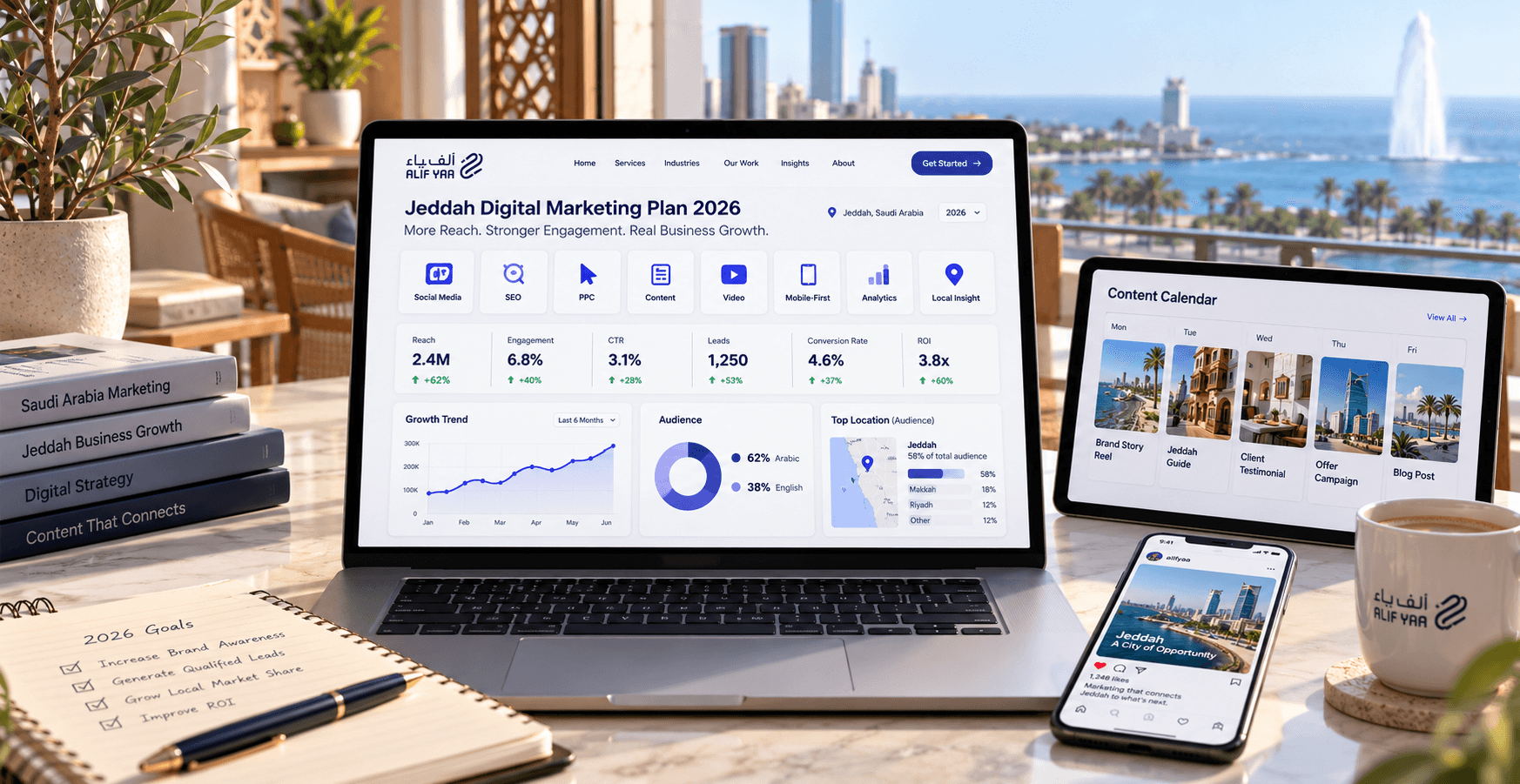
Why Is the Best Web Design Company in Jeddah 2026 Worth Hiring?
Discover how hiring a top web design company in Jeddah in 2026 can transform your online presence through modern design, mobile-first performance, and professional development services.

Best Digital Modernization Company in Saudi Arabia: How to Choose One
Why nobody can rank the best digital modernization company in Saudi Arabia, what these firms actually do, what moves the cost, and what to verify before you sign.